For international families moving to France, understanding the French preschool system can feel confusing at first. Preschool in France—known as école maternelle—is structured differently from early education in many other countries.
One of the first decisions parents face is whether to enroll their child in a public preschool or a private preschool in Paris. While both options offer high-quality education, they differ in terms of class size, language exposure, teaching approaches, and flexibility.
For many expatriate families, the choice often comes down to whether they prefer a fully French environment or a bilingual preschool in Paris, where children can develop both French and English from an early age.
In this guide, we explain how preschool works in France and the key differences between public and private preschools, helping international families make an informed choice.
Preschool in France, called école maternelle, is the first stage of the French education system. It plays a central role in early childhood development and prepares children for primary school.
Children typically attend preschool from age 3 to age 6, across three levels:
Since 2019, school attendance has been mandatory from age three in France. To better understand the French schooling system in 5 minutes, read this article.
French preschools focus on several key developmental areas:
Most children attend public preschools, which are part of the national education system. However, in cities like Paris, many families also choose private schools offering bilingual education or alternative teaching approaches.
Public preschools are the most common option for families living in France. They are part of the national education system and follow the official curriculum established by the Ministry of Education.
Free tuition
Public preschool is free of charge. Families may only pay small fees for services such as school meals or after-school care.
Highly trained teachers
Teachers in public schools are civil servants trained by the national education system. They follow a structured curriculum focused on language development, early mathematics, and social skills.
Integration into the French system
Attending a public preschool helps children integrate into the French education system from an early age and provides continuity through primary school.
While public preschools offer many strengths, they may present challenges for families new to France.
French-only instruction
Public preschools operate almost entirely in French. For children who do not yet speak the language, the transition may initially be challenging.
Larger class sizes
Public preschool classes typically include 25 to 30 children, which can limit individualized attention.
Less pedagogical flexibility
Public schools follow a standardized curriculum, leaving less room for alternative teaching approaches or individualized learning paths.
(Internal linking anchor: public preschool Paris registration)
Private preschools offer an alternative learning environment and are increasingly popular among both French and international families.
Many private preschools in Paris combine the French curriculum with bilingual education, smaller class sizes, and innovative pedagogies.
One of the main reasons families choose a bilingual preschool in Paris is to provide early exposure to both French and English.
Young children are particularly receptive to language learning. Daily immersion in two languages allows them to develop strong communication skills naturally.
Private schools often maintain smaller student-teacher ratios, allowing teachers to better support each child’s development.
This environment helps children develop:
Many private preschools integrate teaching approaches inspired by progressive educational models, including:
These approaches emphasize exploration, autonomy, and hands-on learning.
Private schools may also offer greater flexibility in terms of schedules, extracurricular activities, and educational approaches.
This can be particularly appealing for international families adapting to a new country.
Understanding the main differences between public and private preschools can help parents decide which option best suits their family.
Public PreschoolPrivate PreschoolFree tuitionTuition fees applyLarger classesSmaller classesFrench-only instructionOften bilingualStandardized curriculumInnovative pedagogies possibleAssigned by locationFamilies choose the school
Both systems provide strong early education, but language environment and class size are often the deciding factors for international families.
Paris attracts families from around the world, and many parents want their children to grow up comfortable in both French and English.
A bilingual preschool in Paris offers several advantages.
Children who are new to France can gradually become comfortable with French while still hearing English in the classroom.
Early bilingual exposure supports cognitive development and helps children develop strong communication skills in two languages.
Many bilingual preschools welcome students from diverse cultural backgrounds, creating an enriching and globally minded environment.
École M offers a bilingual preschool in Paris designed to support both local and international families.
Our schools welcome children from 2½ to 6 years old and combine:
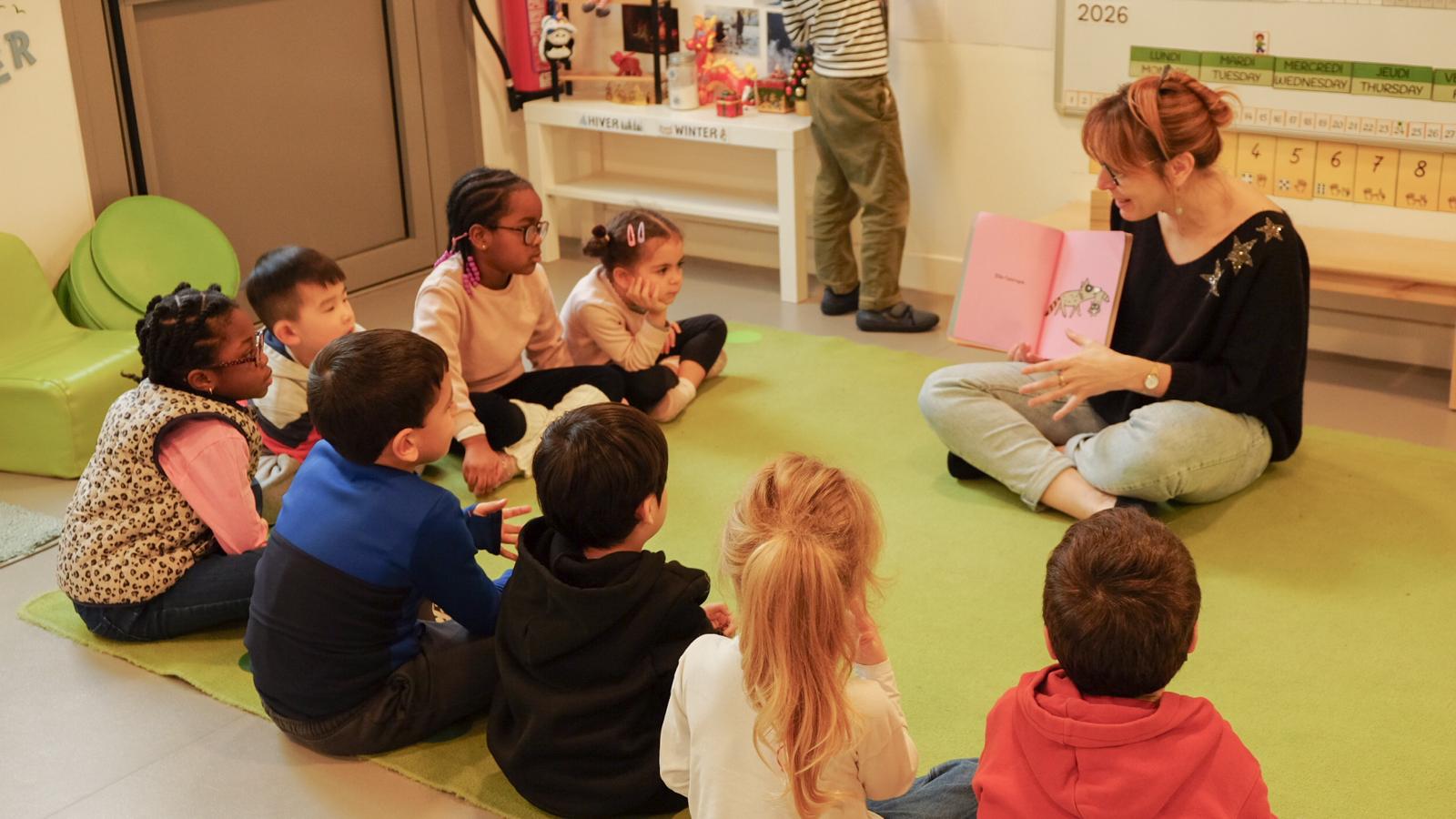
Each classroom includes both French- and English-speaking educators, ensuring that children experience both languages naturally throughout the day.
Choosing the right preschool depends on your family’s priorities and your child’s needs.
When evaluating schools, consider:
Visiting schools and meeting the teaching team can help you better understand the environment and find the best fit for your child.
École M offers a bilingual preschool environment where children develop curiosity, independence, and a love of learning.
Our schools combine:
👉 Request information or schedule a school visit to discover École M.
Yes. Public preschools are funded by the government and do not charge tuition, although families may pay small fees for meals or after-school care.
Public preschools follow the national curriculum and are assigned based on location, while private preschools may offer smaller classes, bilingual education, and alternative pedagogies.
Yes. Paris has many French-English bilingual preschools, offering daily immersion in both languages for young children.
No. Many children begin preschool without speaking French. However, attending a bilingual preschool in Paris can make the transition easier for international families.
Most children start preschool the year they turn three, although some private schools accept children from 2½ years old.